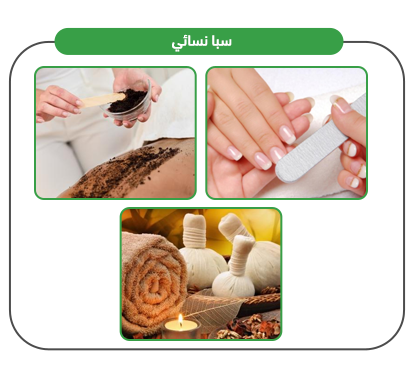
A feasibility study for a women’s spa project with a capital of one million dollars from Mashroo3k Feasibility Studies Company. The project depends on establishing an integrated spa center that provides many cosmetic services for women (skin, body, and hair). The center includes the best devices with modern technologies to provide massage services, steam sessions, hair styling, nail care, steam rooms (sauna), Moroccan bath, and a makeup and cosmetics department.

The women’s spa project is one of the profitable business projects that generate a rewarding financial return due to the Arab woman’s interest in her appearance and beauty most of the time, so the feasibility study of a women’s spa project depends on providing the appropriate atmosphere and place for that, starting from the decoration and colors through the equipment and various services that make it a special place for women that provides maximum luxury and provides integrated beauty services, and since such services need a long time to stay inside the center, the center is available with a buffet to serve hot and cold drinks inside the place.
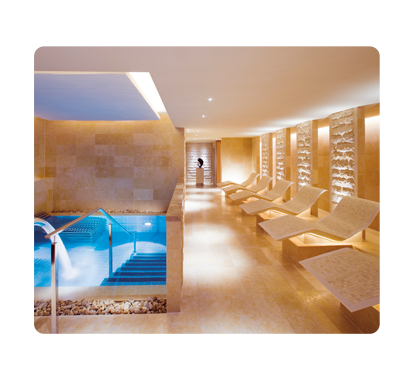
A unique and quiet place for women to gather.
Enjoy an atmosphere of psychological comfort and tranquility.
Provide distinctive and diverse beauty services for women.
Serve hot and cold beverages.
A professional and distinguished team.
Treat customers well and understand their needs.
Organization and sophistication in providing customer services.
Architectural splendor of the project.
Ultimate care in maintaining operational requirements.
Building a strong relationship with customers, making the place their first choice.
Study the project’s concept, components, and nature.
Executive summary
Study project services/products
Market Size Analysis
Risk Assessment
Technical study
Financial study
Organizational and administrative study

Service sector in GCC countries
According to the macroeconomic theory of sectors, the economy is divided into three main and large sectors: the first; – is the sector that is based on collecting raw materials and includes mining companies, timber companies, oil exploration companies, in addition to agricultural and fishing industries. The second sector; is the sector that depends on goods and their sale, such as: (car manufacturing, furniture, clothing trade… etc.). As for the third sector, known as the “services” sector; it is the sector responsible for providing and producing services, essentially relying on intangible things, such as: entertainment, health care, transportation, hospitality, restaurants, etc. This theory believes that the more advanced countries are, the more their economies are based on the third sector, unlike primitive countries, which rely mostly on the first sector (the United States of America, for example, the service sector constitutes 85% of its economy).
Kingdom of Saudi Arabia:
The State of Qatar:
Kuwait:
United Arab Emirates:
Sultanate of Oman:
Global Service Sector
The service sector is the major contributor to the world’s gross product; It alone accounts for more than three fifths of this output. The sector does not rely on the production of tangible goods such as automobile and furniture, but rather on the provision of intangible services such as banking, medical care, transportation, hospitality, leisure, etc. The value of the sector market was estimated in 2020 at USD 10,814.49 billion and rose to USD 11,780.11 billion in 2021. The market achieved a CAGR of 8.9%. After recovering from the effects of the coronavirus pandemic, global market experts expect the sector’s market to reach US $ 15683.84 billion by 2025, bringing the market to a CAGR of 7% in the coming years.