Mashroo3k Consulting Company offers a feasibility study for a hollow concrete block factory project in Qatar, with the highest return on investment and the best payback period. This study is based on a series of in-depth studies of the Qatari market size, an analysis of competitors’ strategies, and the provision of competitive pricing.
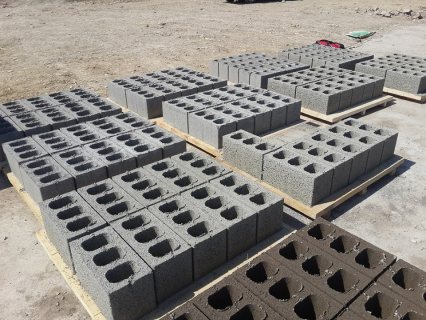
Mashroo3k Consulting offers a comprehensive feasibility study for a hollow concrete block factory project in Qatar, aimed at delivering the highest return on investment and the best possible payback period. This is achieved through detailed market size analyses, competitor strategy assessments, and the provision of competitive pricing models tailored to the Qatari market.<br>Hollow concrete blocks differ from solid concrete blocks mainly in size and design. Hollow blocks are produced in larger dimensions and varied shapes based on the specifications required by the client company. The final product undergoes thorough inspection to ensure it is free from impurities such as coal and clay. Consistency in color, surface texture, and overall finish is carefully monitored to achieve complete uniformity.<br>Hollow concrete blocks are commonly used for internal partitions, exterior walls, load-bearing walls, and structural partitions.<br>Mashroo3k supports investors by providing specialized feasibility studies backed by updated market data specific to Qatar, which contributes to the project’s success, profitability, and long-term sustainability.
Versatile and suitable for both load-bearing and structural walls.
Easy to manufacture and can be produced manually.
Unaffected by exposure to water.
Low water absorption compared to other types of bricks.
Ideal for bathrooms and buildings exposed to high humidity.
High bonding strength with mortar and adhesive construction materials.
Superior durability and load-bearing capacity compared to other brick types.
Cost-effective compared to alternative brick options.
Executive summary
Study project services/products
Market Size Analysis
Risk Assessment
Technical study
Financial study
Organizational and administrative study

Given the importance of the sector, “Mashroo3k” presents below the key performance indicators of the construction and building sector in the Gulf Cooperation Council (GCC) countries:
The Gross Domestic Product (GDP) of the construction and building sector: SAR 168.75 billion
Sector’s contribution to GDP: 4.66%
Number of companies operating in the sector: 148,026
Number of employees in the sector: 3,541,977
Value of projects implemented in the sector (according to the latest statistics): SAR 311.56 billion
Saudi Arabia ranks first in the region as the largest construction market, with an annual value exceeding USD 100 billion
GDP of the construction and building sector: AED 123.95 billion
Sector’s contribution to GDP: 8.3%
Number of companies operating in the sector: 42,428
Number of employees in the sector: 1,564,095
GDP of the construction and building sector: BHD 936.79 million
Sector’s contribution to GDP: 7.7%
In 2016, the sector’s value did not exceed BHD 857 million, but it has since increased over a few years to reach BHD 945.51 million
GDP of the construction sector: OMR 1.943 billion
Sector’s contribution to GDP: 6.7%
Number of employees in the sector: 548,999
The construction sector accounts for the highest percentage of Omani workers in both public and private sectors (22.4%), and 29.6% of the total expatriate workforce in the country
GDP of the construction and building sector: KWD 838.9 million
Sector’s contribution to GDP: 2.14%
Number of companies operating in the sector: 1,502
Number of employees in the sector: 187,705
GDP of the construction and building sector: QAR 81.22 billion
Sector’s contribution to GDP: 12.1%
Number of companies in the sector: 5,629
Number of employees: 840,999
The construction and building sector accounts for over 40% of Qatar’s economically active adult population
The construction and building sector is one of the most promising sectors in the region. There is no doubt that investing in its activities will be highly rewarding in the future. The increasing population and the ongoing improvement of infrastructure across the GCC will make this sector a prime destination for investors and entrepreneurs seeking high returns with minimal hassle.
Experts expect the market to grow at a rate of 4.2% over the next three years, with market value projected to reach USD 10.5 trillion by 2023.
In 2020, the global construction output was estimated at around USD 10.7 trillion, and it is expected to grow by 42% (an increase of USD 4.5 trillion) between 2020 and 2030, reaching USD 15.2 trillion by the end of the decade.

The construction and building sector contributes approximately 13% to the global Gross Domestic Product (GDP), and this share is expected to increase to 13.5% by 2030.
According to the available statistics, infrastructure is projected to top the list of the fastest-growing subsectors within the construction and building industry, with an estimated growth rate of 4% during the period from 2020 to 2030.